Even though they were never really unpopular, superheroes have received a resurgence in popularity in recent years. This can largely be attributed to the smash success of the Marvel Cinematic Universe, who owe their influences to more recent decades of superhero comics, causing other recent superhero movies to follow the trend and look to the 80’s onward for inspiration. In all this celebration for the recent history of comics, however, the older era has been largely forgotten. To some, this may be a good thing: the mid-50’s to early 70’s were not the best time for superheroes. However, recently, there have been two works that choose to forgo this attitude and reach back into the Silver Age of comic books for their aesthetic, and do so in entirely different ways. On top of that, they come from the most unlikely of places: Japan.
With a few exceptions, American superhero comics are not nearly as popular in the east as they are in the west, due to the lack of translations. However, these two manga (Japanese comics) both use them as backdrops for their unique settings and plotlines, and do so by travelling back to the Silver Age of comics, an era that, funnily enough, is not remembered very fondly.
The Silver Age of Comics
By the early 50’s, the popularity of superheroes had waned due to the end of World War II taking away the majority of enemies for heroes to fight, as well as creating a general antipathy towards fighting. They began to be replaced by other genres, such as horror and westerns, and slowly vanished off the shelves. This period between the Golden Age and Silver Age of comics is known as “The Interregnum”, and arguably remains to this day the lowest point of superheroes.
Then, in 1954, psychologist Frederic Wertham published Seduction of the Innocent, a book that accused comics of being directly responsible for juvenile delinquency. This sparked a moral panic that led to the creation of the Comics Code, which prohibited any moral ambiguity, questioning of authority figures, any hint of sexuality and any ending that wasn’t happy, among other things. It completely destroyed the current setup, and comics were at death’s door.
Then, in 1956, relaunches of The Flash and Green Lantern with completely new identities proved to be successful on the sales charts, causing the rest of the comics industry to return to superheroes as their primary genre. The only problem was that the Comics Code was still being rigidly enforced, which meant that writers were forced to basically write stories for children. This led to what was known as the Silver Age of Comics, which spawned the Adam West Batman and a broadway musical about Superman. Basically, it was silly. Very, very silly.
Mainstays of the Silver Age included black and white morality, goofy villains with unthreatening plans, superheroes developing new powers with no rhyme or reason as the plot demands it and science being the cause of, and solution to, every single problem. This would go on until the early 70’s, when the moral panic surrounding comic books was completely forgotten. Superhero comics, now free to do as they pleased, began to tell more serious stories about real-world issues, sparking the Bronze Age of Comics and culminating in the infamous 90’s Dark Age. In the modern day, superhero movies, which form a large part of the modern mythos, mainly take their influences from the Bronze Age onward, leaving the Silver Age largely forgotten as a relic of a bygone era or simply a charming novelty.
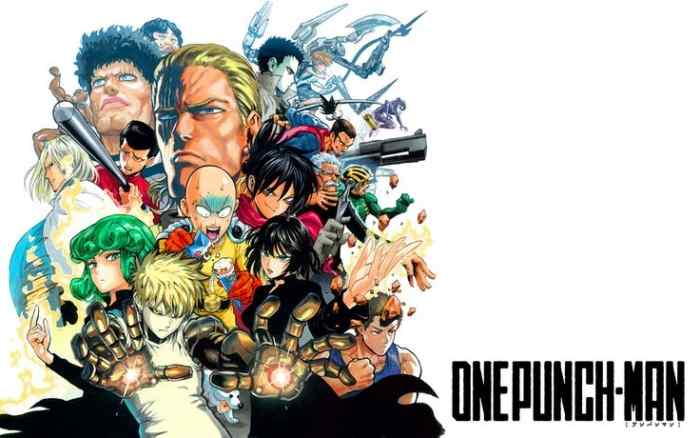
Enter One Punch Man and My Hero Academia. One Punch Man follows Saitama, a lazy and simple man who happens to be so powerful that he can take out basically anything with one punch. Saitama lives in a world of superheroes where the earth is in constant danger from villains and giant monsters. One day, Genos, a half-man half-cyborg superhero, witnesses Saitama in action and appoints himself his pupil. This leads to Saitama discovering that there is actually a whole league of superheroes with specific rankings and hierarchy, and because he is not a part of this organization, all his accomplishments have been completely ignored. Together, Saitama and Genos join the league of superheroes and climb up the ranks, fighting villains, monsters and their own boredom along the way.
Meanwhile, My Hero Academia takes place in a world where 80% of the population has developed superpowers called “Quirks”. This leads to costumed superheroes becoming the norm and gradually becoming part of society. The story follows Izuru Midoriya, a boy with a strong sense of justice who is one of the few unfortunate people without a Quirk. One day, he witnesses All Might, the most powerful superhero in the world, deflate into a skeletal man who constantly coughs up blood, and discovers that because of a wound he received in a fight with a powerful supervillain, his powers are slowly fading. After All Might sees Izuru jumping in to save his childhood friend from a supervillain, he decides to reveal the truth: his Quirk is actually one that is passed down from generation to generation, and he has decided that Izuru is a worthy successor. With that, All Might begins training Izuru for the task of entering Yuuei Academy, the most prestigious school for young superheroes, where they train, grow stronger and come into conflict with a shadowy alliance of villains with mysterious plans…
Both these stories choose to forgo the Bronze to Modern Age of Comics and reach back to the Silver Age instead, with ridiculous powers and odd internal logic. However, rather than simply copying the formula, they put their own spins on the tropes of the era. One Punch Man provides a cynically comedic look at the superheroes of the time, while My Hero Academia chooses the approach of looking back fondly on the period with perfect hindsight. By comparing these two outlooks, you get a clear picture of the legacy that the Silver Age has left behind – ironically, from a country where superheroes are relatively obscure.
Setting
One Punch Man takes place in a vague country, presumably Japan, where there are cities named after each letter of the alphabet. This country is perpetually under attack by monsters to a ridiculous degree, ranging from sea monsters to an army of molemen to an alien invasion. The setting in One Punch Man is as vaguely defined as possible in order to give more time to the real focus – the superheroes and their interactions. Where all these monsters come from and why there are so many people with superpowers is never explained. However, this also has the side effect of commentating on the lack of development in the Silver Age. Often, monsters would come out of nowhere, or be given a handwave-y explanation as to why they were there. This led to a consistent lack of internal logic, as all that mattered was presenting the superheroes and their powers to the reader. The poor definition of One Punch Man‘s setting is completely intentional – by placing the comedy in a place where anything can happen for no apparent reason, it allows for ample mocking of the conventions of the genre and serves as a treasure trove of jokes.
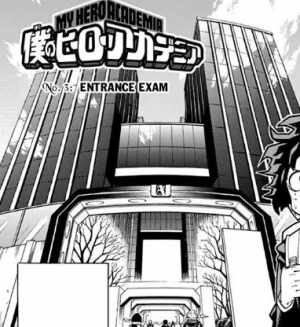
Meanwhile, My Hero Academia takes place in Japan, and although the setting is similar in many ways to One Punch Man, it takes a much more direct effort in developing it’s setting. Monsters don’t simply appear out of nowhere, and society is much more stable. Aspects of this world’s history and how it operates, including the police force and education system, are explained in much greater detail. However, elements such as the majority of the human race having superpowers with no explanation come right out of the Silver Age, but unlike One Punch Man, they are played completely straight. While there is comedy in My Hero Academia, it comes in the form of character interaction, and the ridiculousness of the premise itself is never presented for laughs. An effort is made to provide internal logic to this world, which is more than can be said for One Punch Man or even the original Silver Age comics My Hero Academia takes inspiration from. This is the first evidence of My Hero Academia‘s Silver Age Reconstruction. Instead of simply taking apart the tropes of the Silver Age, it adds onto them in order to create something completely new. It takes a ridiculous setting and premise from the Silver Age, and tries to develop it beyond what the originals were ever capable of.
Heroes
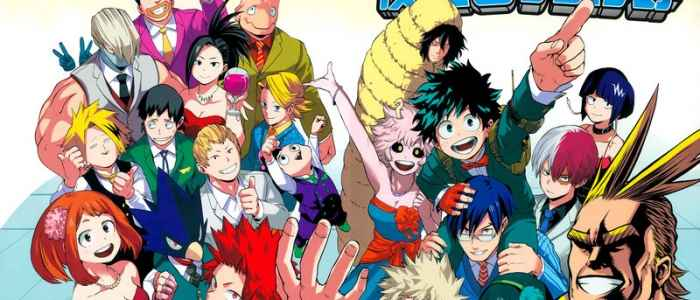
My Hero Academia follows the adventures of Class 1-A of Yuuei Academy, the most prestigious high school in the world for young superheroes. Though every member of the class gets at least a personality, a name and a power, the primary main characters are Izuru, his childhood friend-turned-bully Katsuki Bakugou, a cheerful girl he befriends named Ochako Uraraka, the earnest class president Tenya Iida and a mysterious ace named Shouto Todoroki. While My Hero Academia‘s setting comes right out of the Silver Age, their characters do not. Katsuki and Shouto are both far more dark and violent characters than what would’ve been allowed in the era, while Ochako and Tenya, initially positive and light-hearted characters, get more serious development as the manga goes on. Even All Might, whose design is the most blatant homage to American comics in the entire manga, has his own personal issues, although when taken by itself his character would definitely fit in alongside the pure and untouchable superheroes of the Silver Age. The only character who fully represents the ideals of the Silver Age is the main character, Izuru. A noble and courageous boy who always works to save everyone he can, his only character flaw is his relative weakness and youth, which the manga centers around improving. Ultimately, the end goal of My Hero Academia besides defeating the mysterious alliance of villains is for Izuru to become the classic Silver Age hero: pure, selfless and completely flawless.
Those are three adjectives that most definitely do not describe the heroes of One Punch Man. In this world, heroes are ranked according to the Hero Association, a governing body that protects threats to the planet. After taking the admissions test, they are given a grade from C to S based on their power, and advance through the ranks by defeating villains and protecting the innocent. This has led to many “heroes” becoming focused solely on their own ranking and prestige, choosing to purposely put other heroes down for no other reason then to prevent them from threatening their status. The manga follows Saitama as he enters this competitive and cutthroat world and completely turns it on it’s head, dealing with the various challenges thrown his way in a completely apathetic and casual way. Saitama himself is definitely no Silver Age peak of human condition either: if it weren’t for his superpowers, he’d basically be a lazy bum. Yet, it’s demonstrated time and time again that he’s a true hero and always does the right thing. This is another way One Punch Man purposefully goes against the conventions of the Silver Age: the most powerful and heroic character is not a beloved and perfect specimen, but a simple man with incredible power. This ties into a theme prominent in both One Punch Man and My Hero Academia – anyone can be a hero. The only difference is that My Hero Academia is optimistic about both heroism and the concept of superheroes, while One Punch Man, judging by it’s portrayal of the bureaucracy of the Hero Association, is optimistic about heroes but cynical about superheroes. It’s this key difference that separates it from the typical superhero comic.
Silver Age comics didn’t do much delving into the morality of what they were doing, but one message was made clear: in order to be a hero, you had to be rich or have powers. Both of these manga make an effort to avert that message, and in doing so either intentionally or unintentionally provide commentary on the comics they draw influence from. Both Izuru and Saitama start their stories completely powerless and normal people, yet either through the course of the story or before it even begins, they’ve reached the necessary qualifications to be a “hero”. These manga reject the specific molds of the Silver Age in favour of telling their readers that you can be just a normal person who works hard, and in the end you will be rewarded. Regardless of the truth of that statement, these works believe in it wholeheartedly, and that’s what matters.
Villains
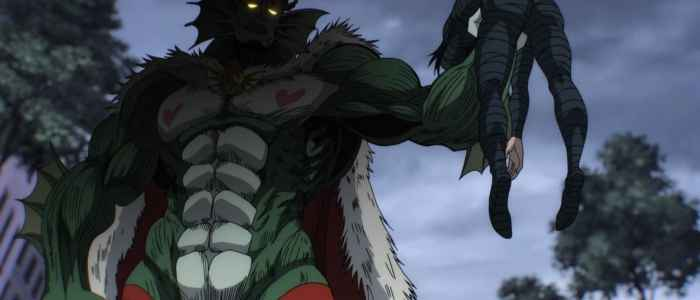
The villains of One Punch Man are mostly complete caricatures. Their sole function is to establish themselves as ridiculously powerful, only to get crushed by Saitama in one blow for comedy’s sake. However, there are some that have been able to put up something resembling a fight against him, namely the alien king Boros and the “Hero Killer” Garou. Both these villains are presented as having at least some kind of motivation, with Boros even being similar to Saitama in many ways. During the course of their fight, it’s revealed that the reason Boros attacked Earth was due to a prophecy that there would be someone able to put up a fight against him there. Boros, who is so strong that nobody in the galaxy can fight him, goes there to relieve his unease. Garou, meanwhile, wants to become so powerful a villain that all the heroes of the world, currently at odds with each other, band together to stop him. These villains are presented as having some redeeming qualities or sympathetic moments, further exemplifying One Punch Man‘s unwillingness to abide by the black and white morality of the Silver Age despite taking it’s inspiration from it. In any other work, these would be one-dimensional monsters, and even here most of them are. It’s just the little effort One Punch Man makes that differentiates it from it’s Silver Age ilk.
My Hero Academia makes no such effort. The villains are just that: villains. If they do have motivations or reasons to sympathize with them, they have yet to be revealed. The members of the mysterious League of Villains are sadistic psychopaths who wish to kill All Might, seen as the “symbol of peace”, just for the sake of it. Even the one villain who is given motivation, the “Hero Killer” Strain, is presented as a monster who is going about things completely the wrong way. In the effort to reconstruct the Silver Age of superheroes, My Hero Academia subscribes firmly to black and white morality. That is not to say that the villains are completely unthreatening – in fact, the one thing that My Hero Academia manages to do with it’s villains is make them far more menacing than the comics it takes inspiration from. It just means that My Hero Academia chose to go with a classic approach in order to fit in with the pre-established precedent set by the Silver Age, although as many of the villains have been recently introduced, this may change in the future.
By contrasting these separate approaches, you get some insight into what the creators’ attitudes towards Silver Age comics are. My Hero Academia, at least for the time being, firmly ascribes to black and white morality, while One Punch Man is a little more flexible with it. Despite My Hero Academia being more liberal in it’s definition of “hero” than most comics, it does not apply that same generosity to villains. One Punch Man is willing to be a bit more sympathetic towards it’s villains, but at the end of the day, they both have the same policy: heroes are heroes, and villains are villains.
Story
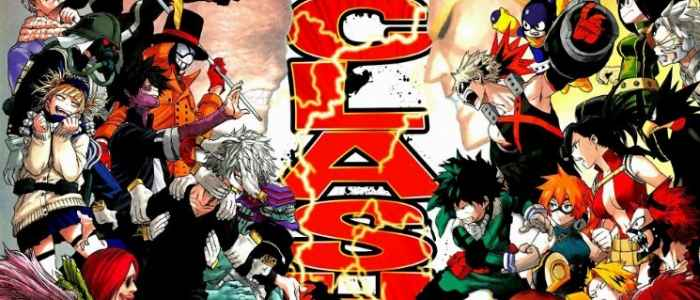
The story of My Hero Academia follows the class of Yuuei 1-A as they get stronger, fight the League of Villains and grow to overcome their individual flaws. It’s very much a typical formula for a fighting manga, but when adding the Silver Age influences to the mix, it becomes something completely new. The best way to describe My Hero Academia would be as reconstructing the Silver Age using the materials of a fighting manga: old, yet different.
One Punch Man‘s story can best be described as a series of vignettes rather than one overarching story. Although there is a vague goal – climb to the top of the Hero Association – it is mostly periphery to the characters bouncing off one another. As One Punch Man is primarily a comedy with occasional dramatic moments, this works. While My Hero Academia reconstructs the Silver Age into a new work, One Punch Man chooses to spend it’s time making fun of it or pointing out it’s flaws. Basically, One Punch Man is the aesthetic of the Silver Age with the principles of post-modern comics. It questions the structures it resides in, but resides in them all the same.
The only question is: which is more productive? Read the works and decide for yourself.